CATEGORY: Manifestation Basics
Beginning a manifestation journey can feel exciting, inspiring, and sometimes overwhelming. Search online and you will quickly find thousands of videos, books, courses, journals, affirmations, vision boards, and success stories—all claiming to reveal the secret to manifesting the life of your dreams. While many of these resources contain useful ideas, they can also leave beginners wondering where to start.
The truth is that manifestation does not need to be complicated. It does not require expensive courses, elaborate rituals, or hours of daily practice. At its heart, manifestation is about becoming intentional. It begins with understanding what truly matters to you, developing a constructive mindset, creating meaningful goals, and taking consistent action toward them.
Rather than trying to change everything overnight, successful manifestation is built on simple daily habits that gradually become part of your lifestyle. Small improvements made consistently often produce far greater long-term results than dramatic bursts of motivation followed by inactivity.
This guide provides a practical, step-by-step introduction to manifestation, helping beginners build a balanced routine that combines optimism with realistic action.
Step One: Decide What You Truly Want
Every manifestation journey begins with clarity.
Many people struggle because their goals remain vague or constantly change.
Instead of saying:
“I want a better life.”
Ask yourself more specific questions such as:
- What would I like to improve?
- Which area of life matters most right now?
- What kind of person do I want to become?
- What skills do I want to develop?
- What values are most important to me?
Clear answers provide direction and help prevent distractions.
Step Two: Define Meaningful Goals
Once you understand your priorities, transform them into specific goals.
Good goals are easier to pursue because they provide measurable direction.
Examples include:
- Read twelve books this year.
- Exercise three times each week.
- Save a specific amount of money.
- Learn conversational Spanish.
- Build a successful online business.
- Improve communication skills.
The more clearly you define a goal, the easier it becomes to create an action plan.
Step Three: Understand Your “Why”
Goals become much easier to maintain when they have personal meaning.
Ask yourself:
- Why is this goal important?
- How will my life improve?
- Who will benefit?
- What values does this goal support?
Strong personal reasons often provide motivation during difficult periods.
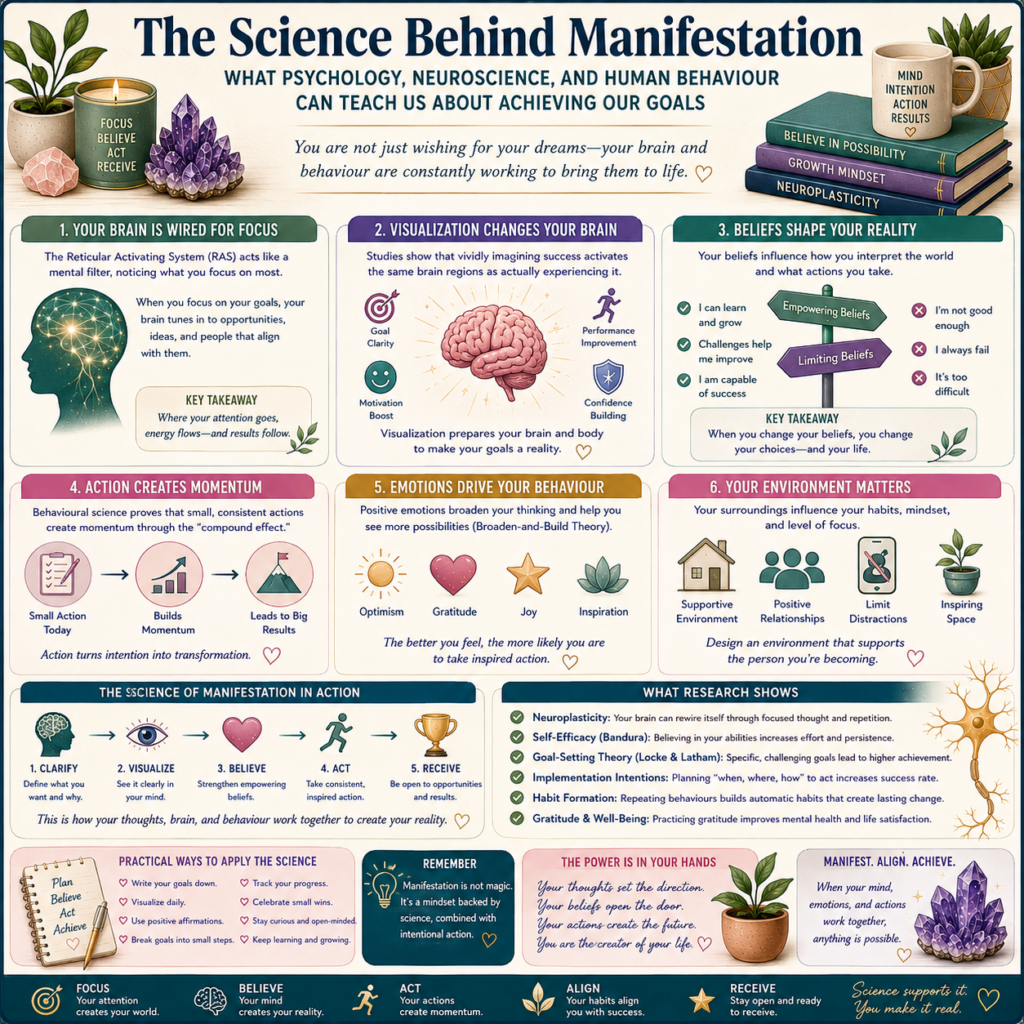
Step Four: Visualize Success
Visualization helps create mental familiarity with future achievements.
Spend a few minutes imagining:
- Completing your goal.
- Overcoming obstacles.
- Feeling proud of your progress.
- Remaining consistent.
The objective is not to escape reality but to mentally prepare yourself for the effort ahead.
Visualization works best when it inspires action rather than replacing it.
Step Five: Create Daily Habits
Large achievements usually grow from small routines.
Instead of relying on occasional bursts of motivation, focus on habits that are easy to repeat.
Examples include:
- Reading twenty minutes each day.
- Walking every morning.
- Writing daily.
- Saving a small amount each week.
- Practising a skill consistently.
Small actions performed regularly become powerful over time.
Step Six: Develop Positive Self-Talk
Everyone has an internal dialogue.
Learning to replace unnecessarily discouraging thoughts with balanced, constructive ones can improve confidence and resilience.
Instead of thinking:
“I’ll never succeed.”
Try asking:
“What can I learn that will help me improve?”
This shift encourages curiosity instead of defeat.
Step Seven: Practice Gratitude
Gratitude helps maintain emotional balance while pursuing ambitious goals.
Many people spend a few minutes each day reflecting on:
- Family.
- Friendships.
- Health.
- Learning opportunities.
- Personal progress.
- Everyday moments of happiness.
Gratitude encourages appreciation for the present while still allowing room for future growth.
Step Eight: Take Consistent Action
This is where manifestation becomes practical.
Every meaningful goal requires action.
For example:
If your goal is improving fitness:
- Exercise regularly.
- Improve nutrition.
- Prioritize sleep.
- Learn about healthy habits.
If your goal is career development:
- Study new skills.
- Build professional relationships.
- Seek learning opportunities.
- Continue improving your expertise.
Action transforms intention into measurable progress.
Step Nine: Learn from Setbacks
Every worthwhile journey includes obstacles.
Rather than viewing setbacks as failure, ask:
- What happened?
- What can I improve?
- Which strategy should I change?
- What did I learn?
Every challenge becomes valuable when it contributes to future growth.
Step Ten: Review Your Progress
Regular reflection helps maintain momentum.
Each week, consider:
- What went well?
- Which habits remained consistent?
- Which goals need adjustment?
- What should I focus on next?
Reviewing progress prevents small problems from becoming long-term obstacles.
Building a Simple Daily Manifestation Routine
A beginner-friendly routine does not need to be lengthy.
Morning
- Review your main goal.
- Set one positive intention.
- Visualize your priorities for a few minutes.
During the Day
- Take one meaningful action.
- Stay aware of opportunities.
- Remain flexible.
Evening
- Reflect on the day.
- Record lessons learned.
- Practice gratitude.
- Prepare tomorrow’s priorities.
Consistency matters more than perfection.
Common Beginner Mistakes
Many newcomers unintentionally make manifestation more difficult than necessary.
Common mistakes include:
- Setting unrealistic expectations.
- Chasing too many goals at once.
- Waiting for motivation before acting.
- Comparing progress with others.
- Ignoring setbacks instead of learning from them.
- Believing thoughts alone create results.
Understanding these pitfalls helps build healthier long-term habits.
Why Patience Matters
Meaningful personal growth rarely happens overnight.
Developing new habits, learning skills, and achieving worthwhile goals all require time.
Progress often occurs gradually through:
- Daily effort.
- Continuous learning.
- Adaptation.
- Persistence.
Patience allows consistent action to produce meaningful long-term improvements.
Making Manifestation Part of Your Lifestyle
Rather than treating manifestation as a temporary challenge, consider integrating its principles into everyday life.
Examples include:
- Living intentionally.
- Maintaining healthy routines.
- Learning continuously.
- Treating setbacks as opportunities.
- Remaining grateful.
- Pursuing meaningful goals.
Over time, these habits become part of your identity rather than isolated exercises.
Final Thoughts
Starting manifestation is much simpler than many people imagine. It begins with knowing what truly matters, setting meaningful goals, cultivating a constructive mindset, practising gratitude, visualizing success, and—most importantly—taking consistent action every day. While no practice can guarantee specific outcomes, developing intentional habits places you in a stronger position to recognize opportunities, overcome challenges, and continue growing throughout life.
Manifestation is not about waiting for change to happen. It is about becoming the person who creates positive change through daily choices, thoughtful decisions, and purposeful action. Every meaningful journey begins with a single step, and every lasting transformation is built through consistent progress over time.
—
The End
Velourana.com
 Discover More From Our Family of Websites
 ZodiacBearing (Astrology, Tarot, Numerology, Angel Numbers & Spiritual Guidance)
 Velourana (Beauty, Makeup, Hair Care, Skincare & Beauty Tips)
 HavenBearing (Home, Living, Organization, Décor & Everyday Inspiration)
 PawBearing (Pet Care, Dog Breeds, Animal Health, Training & Pet Products)
 PsyCatherine (Notes From the Journal of a Psychologist on Real Life)