CATEGORY: Manifestation Basics
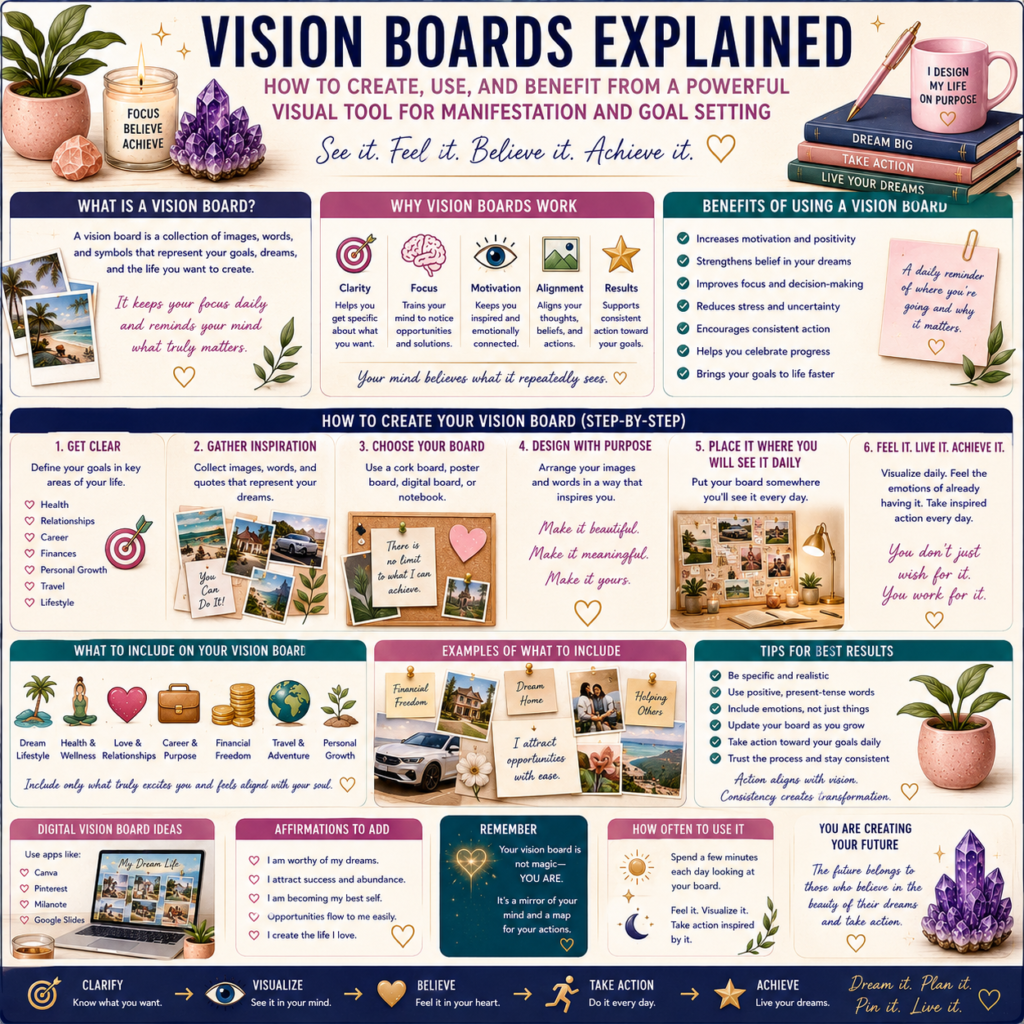
Among all the tools associated with manifestation, few are as popular or as visually inspiring as the vision board. Whether displayed on a wall, saved as a digital collage, or kept inside a personal journal, vision boards have become a favourite practice for people who want to clarify their goals, maintain motivation, and stay focused on the future they hope to create.
To some, a vision board is simply a collection of attractive images. To others, it represents a daily reminder of personal dreams and long-term aspirations. While opinions differ regarding its effectiveness, one thing is clear: a thoughtfully created vision board can serve as a practical organisational tool that keeps meaningful goals visible and encourages consistent action.
A vision board is not a magical object that automatically attracts success. Instead, it functions as a visual representation of your priorities. By regularly seeing your goals, you are reminded of the habits, decisions, and actions required to move closer to them. When combined with planning and persistence, a vision board becomes a valuable aid for intentional living.
This guide explores what vision boards are, why they have become so popular, how to create one effectively, and how to use it as part of a balanced manifestation practice.
What Is a Vision Board?
A vision board is a collection of images, words, symbols, and inspirational phrases that represent the goals, values, and experiences you hope to pursue.
It serves as a visual reminder of what matters most to you.
A vision board may include aspirations related to:
- Health.
- Career.
- Relationships.
- Education.
- Financial goals.
- Personal growth.
- Travel.
- Creativity.
- Lifestyle.
The purpose is not to predict the future but to keep your attention focused on meaningful priorities.
Why Vision Boards Have Become So Popular
Vision boards combine creativity with goal setting.
Many people find them motivating because they:
- Encourage clarity.
- Inspire optimism.
- Simplify long-term planning.
- Keep goals visible.
- Reinforce daily intentions.
Rather than allowing ambitions to remain abstract ideas, vision boards transform them into something you can see every day.
The Psychology Behind Visual Reminders
Human beings naturally respond to visual information.
When important goals remain visible, they are more likely to remain in our awareness.
Regular visual reminders may encourage people to:
- Remember priorities.
- Stay motivated.
- Notice relevant opportunities.
- Maintain consistency.
- Continue taking action.
The board itself does not create results, but it can help maintain focus on behaviours that support those results.
Start with Reflection
Before collecting images, spend time thinking carefully about what truly matters.
Ask yourself questions such as:
- What kind of life do I want to build?
- Which values guide my decisions?
- What goals are most important this year?
- What skills would I like to develop?
- How do I want to feel in everyday life?
Clear answers provide direction for the rest of the process.
Choose Meaningful Goals
A vision board becomes more effective when it reflects authentic priorities rather than temporary trends.
Examples of meaningful goals include:
- Improving physical health.
- Developing a successful business.
- Strengthening family relationships.
- Learning a new language.
- Building financial security.
- Travelling responsibly.
- Creating more balance in daily life.
Choose goals that genuinely inspire you rather than those based solely on external expectations.
Selecting Images
Images form the heart of every vision board.
Look for pictures that genuinely represent your aspirations.
Examples may include:
Health
People exercising, healthy meals, outdoor activities, or peaceful nature scenes.
Career
Professional workspaces, books, educational achievements, or business growth.
Relationships
Family gatherings, friendships, kindness, or meaningful connections.
Personal Growth
Reading, learning, creativity, confidence, or mindfulness.
The emotional connection you feel toward an image is often more important than its artistic quality.
Including Inspirational Words
Many people combine images with meaningful words or short phrases.
Examples include:
- Growth.
- Courage.
- Balance.
- Discipline.
- Gratitude.
- Confidence.
- Curiosity.
- Progress.
These words serve as daily reminders of the attitudes you wish to cultivate alongside your goals.
Physical or Digital?
Vision boards can be created in several formats.
Physical Board
Often made using cork boards, poster boards, magazines, printed photographs, and handwritten notes.
Digital Board
Created using presentation software, graphic design applications, or mobile devices.
Both approaches work well.
The best choice depends on which format you are most likely to view consistently.
Keep It Realistic
A common mistake is filling a vision board with unrealistic or contradictory ambitions.
Instead:
- Prioritize quality over quantity.
- Focus on goals that truly matter.
- Allow room for growth over time.
- Update the board as your priorities evolve.
A smaller collection of meaningful goals is often more motivating than an overcrowded display.
Using Your Vision Board Effectively
Simply creating a vision board is only the beginning.
Make it part of your daily routine by:
- Viewing it regularly.
- Reflecting on your goals.
- Reviewing your progress.
- Adjusting priorities when needed.
- Taking practical action every day.
The board functions as a reminder—not a replacement—for effort.
Combining Vision Boards with Goal Planning
Vision boards become even more useful when paired with written planning.
For each major goal, consider:
- Why it matters.
- The skills required.
- Daily habits that support it.
- Milestones to measure progress.
This transforms inspiration into an actionable roadmap.
Common Mistakes to Avoid
Many beginners unintentionally reduce the usefulness of their vision board.
Common mistakes include:
- Adding too many unrelated goals.
- Copying someone else’s dreams.
- Expecting instant results.
- Never looking at the board again.
- Failing to take meaningful action.
A vision board works best when it supports consistent habits rather than replacing them.
Updating Your Vision Board
Goals naturally change as life evolves.
Review your vision board regularly.
Consider updating it when:
- Major goals are achieved.
- New priorities emerge.
- Interests change.
- Personal growth creates different aspirations.
Your board should reflect the person you are becoming rather than remaining permanently fixed.
Vision Boards and Personal Growth
The greatest value of a vision board often lies not in the images themselves but in the conversations it encourages with yourself.
Creating one invites reflection on questions such as:
- What truly matters?
- What kind of person do I want to become?
- Which habits support my future?
- How can I continue growing?
These questions promote self-awareness, which remains one of the most important aspects of manifestation.
Final Thoughts
A vision board is much more than a decorative collection of inspiring pictures. It is a visual expression of your goals, values, and aspirations that helps keep your attention focused on what matters most. When combined with thoughtful planning, daily habits, and consistent action, it becomes a practical tool that supports motivation, self-reflection, and intentional living.
The true power of a vision board lies not in attracting success automatically but in reminding you, every day, of the future you are actively working to create. By choosing meaningful goals, reviewing them regularly, and taking purposeful action, you transform your vision board from a simple collage into a lasting companion on your personal growth journey.
—
The End
Velourana.com
 Discover More From Our Family of Websites
 ZodiacBearing (Astrology, Tarot, Numerology, Angel Numbers & Spiritual Guidance)
 Velourana (Beauty, Makeup, Hair Care, Skincare & Beauty Tips)
 HavenBearing (Home, Living, Organization, Décor & Everyday Inspiration)
 PawBearing (Pet Care, Dog Breeds, Animal Health, Training & Pet Products)
 PsyCatherine (Notes From the Journal of a Psychologist on Real Life)